Project Description
Category: Landscape Architectural Design: Site Design
Award: Honor
Project Name: South Cape May Meadows Preserve Boardwalk
Entrant: Princeton Hydro
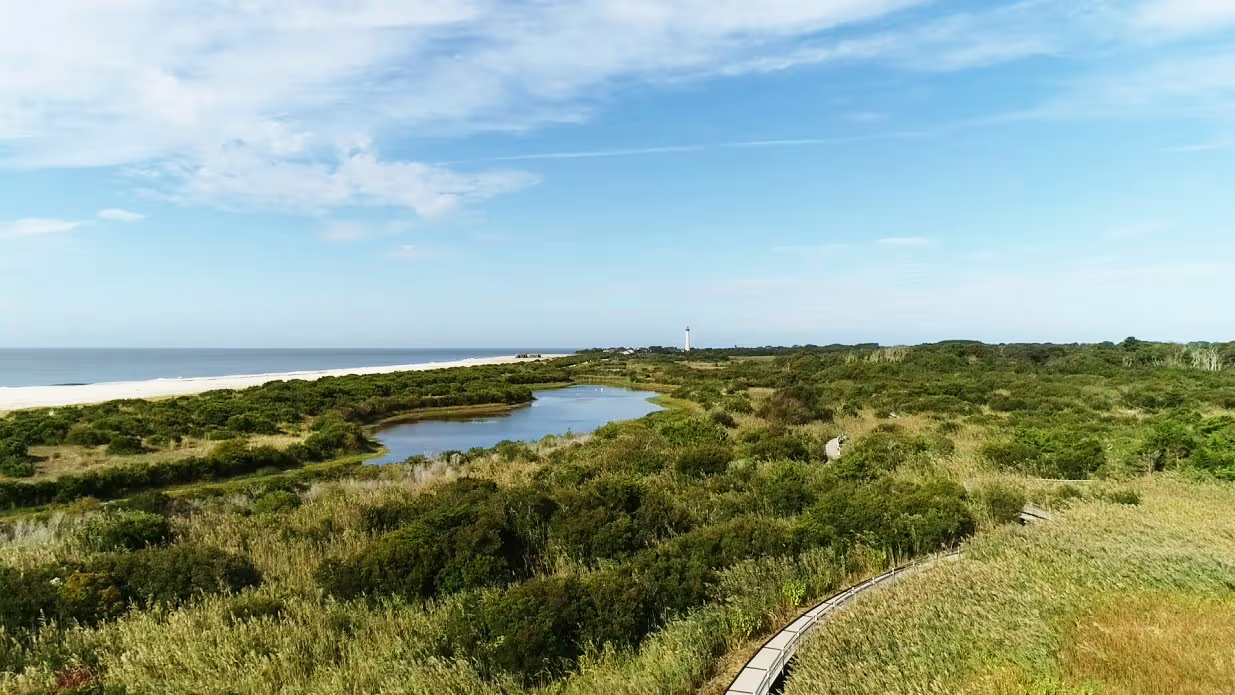
Nestled within the freshwater wetlands of the South Cape May Meadows Preserve, The Boardwalk Trail creates a half-mile universally accessible route through one of the region’s most ecologically significant landscapes. Commissioned by The Nature Conservancy (TNC), the project was envisioned to provide inclusive public access and environmental education within a fragile ecosystem that serves as a crucial stopover on the Atlantic Flyway.
The design delivers a low-impact, immersive route that lets visitors of all abilities explore the freshwater wetlands while fully protecting sensitive hydrology and habitat. Raised above ground, the boardwalk experience reveals the wetlands’ seasonal rhythms and connects people to the landscape without intrusion or alteration.
The Boardwalk Trail lies within an approximately 200-acre freshwater wetland estuary complex that was historically modified and restored by the Army Corps of Engineers, to function as a natural sponge that filters runoff, stores stormwater, and supports amphibians, aquatic plants, and migratory birds. The preserve is bordered to the South by a protective dune system, the Delaware Bay and Atlantic Ocean shorelines, and is located between historic downtown Cape May and Cape May Point.
Designing in wetlands demands care for the seasonal water levels, soft soils, critical habitat, and stringent regulations. Traditional boardwalk construction methods and materials risked increased wetland disturbance and potential issues with the longevity of the final product. The design team utilized helical pile foundations installed with lightweight equipment, allowing the structure to be installed from the top down and reducing project impacts. The materials used include recycled plastic deck boards, anodized aluminum structural components and stainless-steel fasteners, all of which are designed to hold up within the harsh coastal environment.
A Landscape Architect led site planning, environmental coordination, spatial design, and construction oversight, shaping the boardwalk’s alignment, visual character, and interpretive framework to protect wetland function while deepening public understanding of its value. The Preserve Boardwalk demonstrates how Landscape Architecture can unite accessibility, education, and ecological preservation. This project offers a model for sustainable recreation in sensitive landscapes, balancing human experience with habitat conservation, and adding to an already amazing living classroom that will endure with the tides and seasons.