Project Description
Category: Landscape Planning and Analysis
Award: Merit
Project Name: Rutgers Gardens Vision Plan
Entrant: ETM Associates
Rutgers Gardens Vision Plan
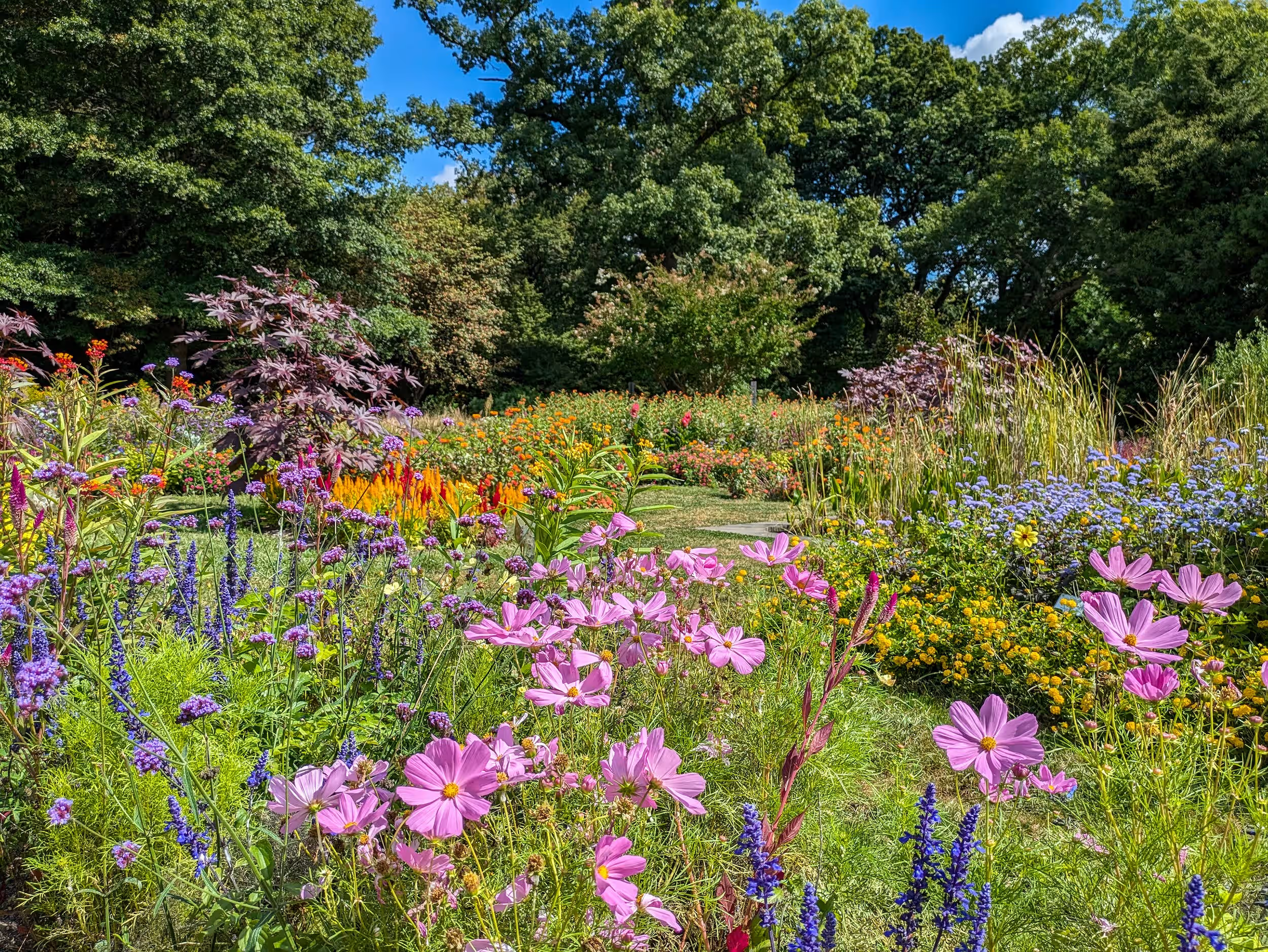
The Rutgers Gardens Vision Plan is a strategic vision plan our firm developed for Rutgers Gardens, the 180-acre botanical garden of Rutgers, The State University of New Jersey. Currently, the site features public display gardens, natural areas, a student vegetable farm, and university research areas, all functioning as “living laboratories” for experiential learning. However, the visitor experience is disjointed, access is challenging, recognition is limited, and previous physical master plans had little implementation. Our goal was to develop a strategic vision plan that provides clear direction and operational recommendations, guiding Rutgers Gardens toward aspirational goals and long-term success.
Development of the vision plan was an expansive and iterative process, guided by the holistic systems thinking approach of landscape architecture. Research and analysis incorporated diverse data sources and stakeholders to provide a comprehensive review of current conditions and ensure no single perspective dominated the process. This work included a review of over 20 related documents and projects; an online stakeholder survey with 688 responses; benchmarking of 22 similar and inspirational institutions; an extensive interview process of 37 interviews representing 71 stakeholders; and an on-site assessment conducted via multiple site visits. Recognizing interconnectivity, our analysis incorporated broad aspects of Rutgers Gardens such as the physical site, finances, staffing, and overall organization.
Understanding current conditions and challenges was foundational in defining the future vision of Rutgers Gardens: “A well-loved space for learning and enjoyment throughout all seasons of the year.” The vision serves as the “north star” of the plan, supported by a refined mission and key values. Critically, the Vision Plan establishes how Rutgers Gardens can achieve this vision. First, we present recommended goals and action items within four main themes that aim to address core challenges and opportunities identified in the analysis phase. Second, we identify more specific resource and implementation needs and strategies to meet the gaps. Lastly, we present for consideration future projects that include tracking and celebrating progress toward achieving vision plan goals. Already enthusiastic work toward achieving the new vision is underway at Rutgers Gardens.
We are very proud to have developed this Vision Plan, which will be an inspirational and practical resource that guides Rutgers Gardens’ service to the university and public communities into the future.