Project Description
Category: Student Entries
Award: Honor
Project Name: Saving Two Birds With One Facade
Entrant: Lain Lomery
Rutgers University Campuses – Newark and New Brunswick, NJ
Bird-window collisions are a global phenomenon, and the second greatest cause of avian mortality in the world. Numerous architectural and landscape features have proven to be linked to these collisions, leading to the inadvertent decimation of species and greatly impacting systems beyond the local scope.
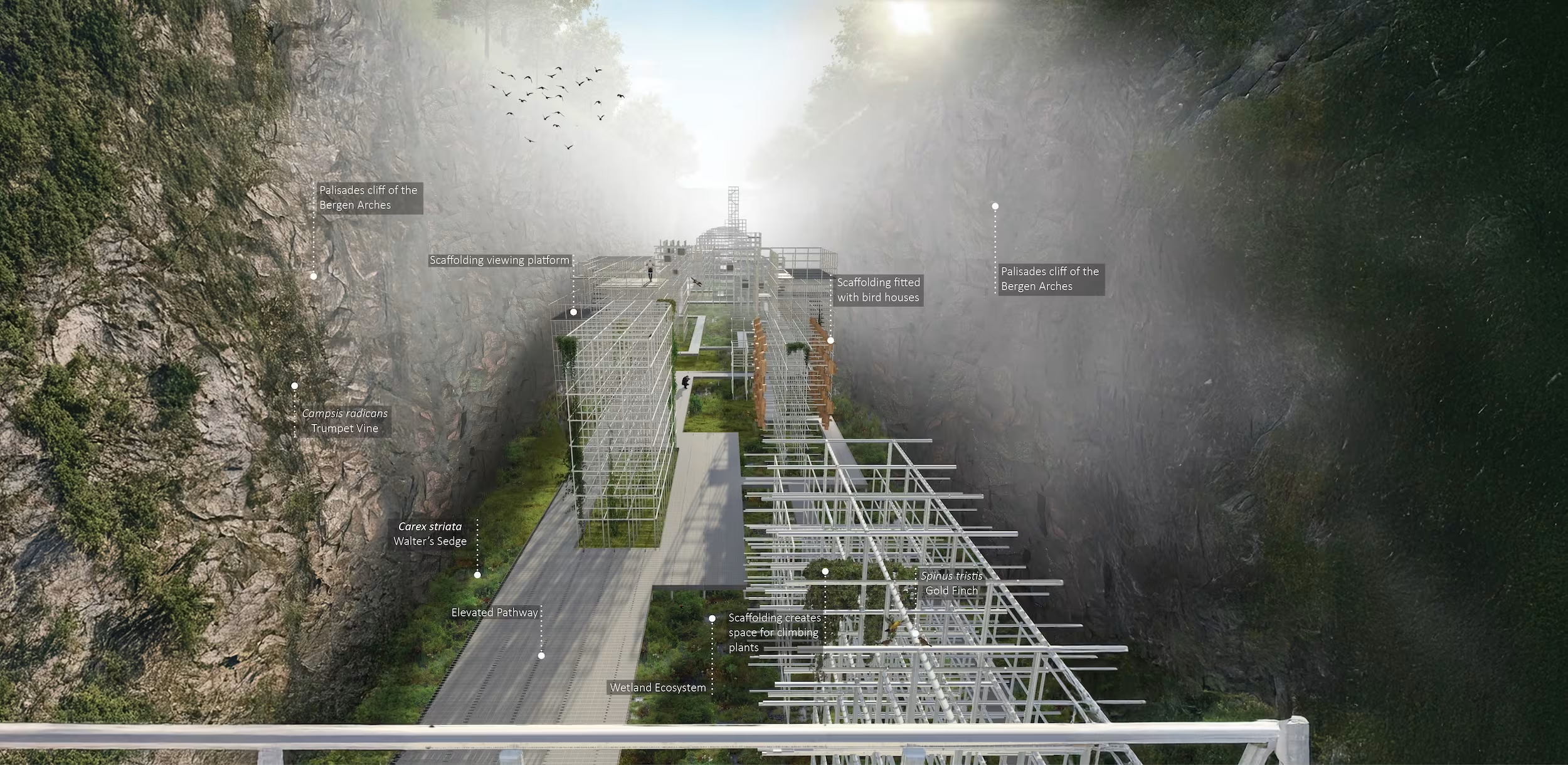
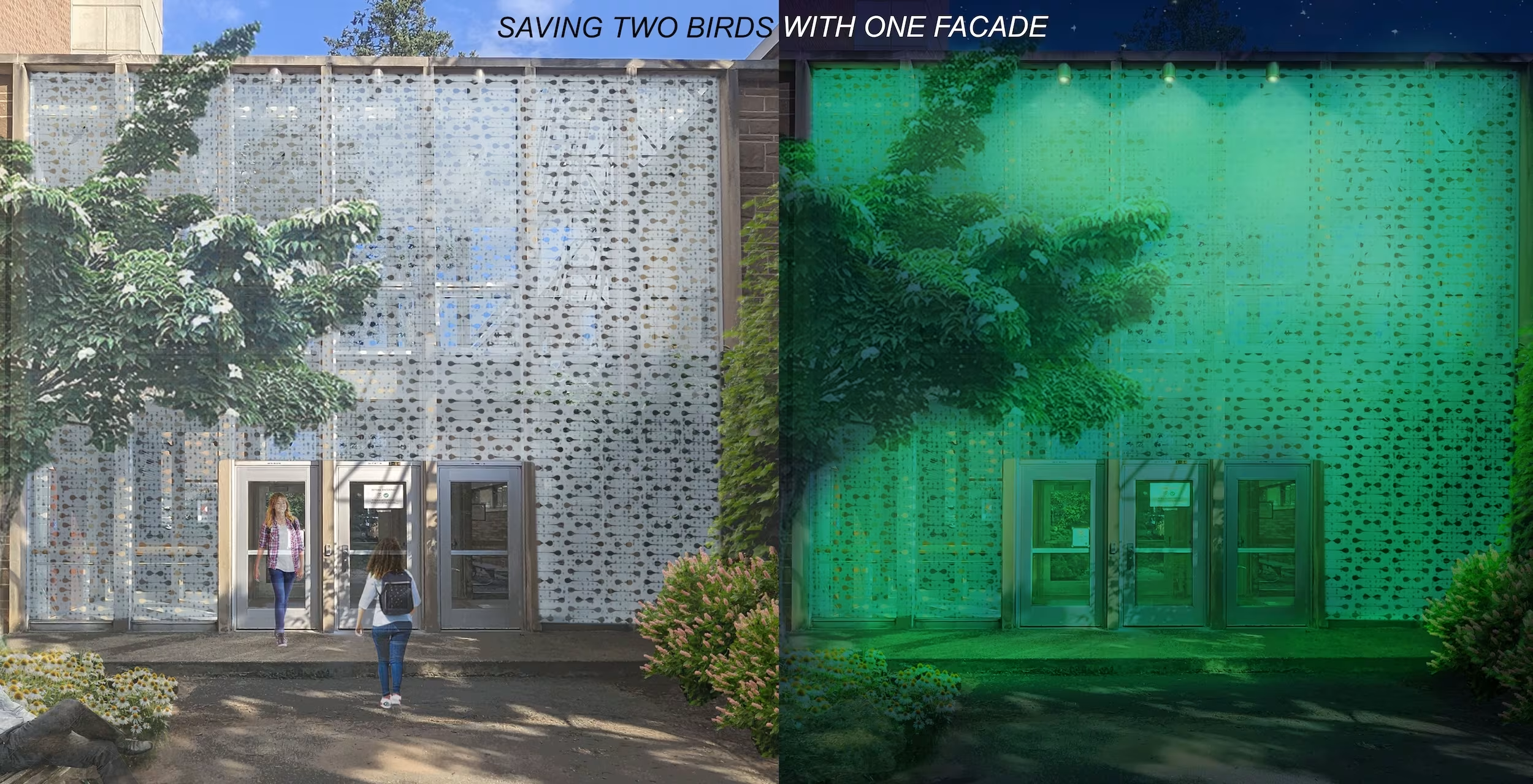
This research-based design thesis reveals locations on the Rutgers Newark and New Brunswick campuses where collisions occur most frequently, and which species were found most often on each campus. With this information, one building on each campus was chosen as a priority site for design intervention. Factors associated with collisions were identified at each building, and corresponding interventions were suggested. The seasonality and dietary needs of the five species most disproportionately affected on each campus guided the plant selections at each site. At both buildings, facades are suggested for intervention, as they create a barrier between the reflective windows and surrounding vegetation. Such a protective barrier allows landscape architects and planners to incorporate beneficial wildlife habitat in urban areas, without compromising the stability of local and distant ecosystems.
This thesis attempts to find unique, middle ground solutions that address ecological concerns, while still appealing to human interest. The result is a potential solution to bird-window strikes that is more sculptural, & has a more discreet purpose, than solutions like window stickers. It addresses the various scales at which this global concern must be resolved – from urban spatial patterns to plant layout at individual buildings. Most of all, the project utilizes my experience in both conservation biology and landscape architecture to find gaps in knowledge where the fields overlap, and explore potential variables in the landscape that have otherwise gone unexamined.